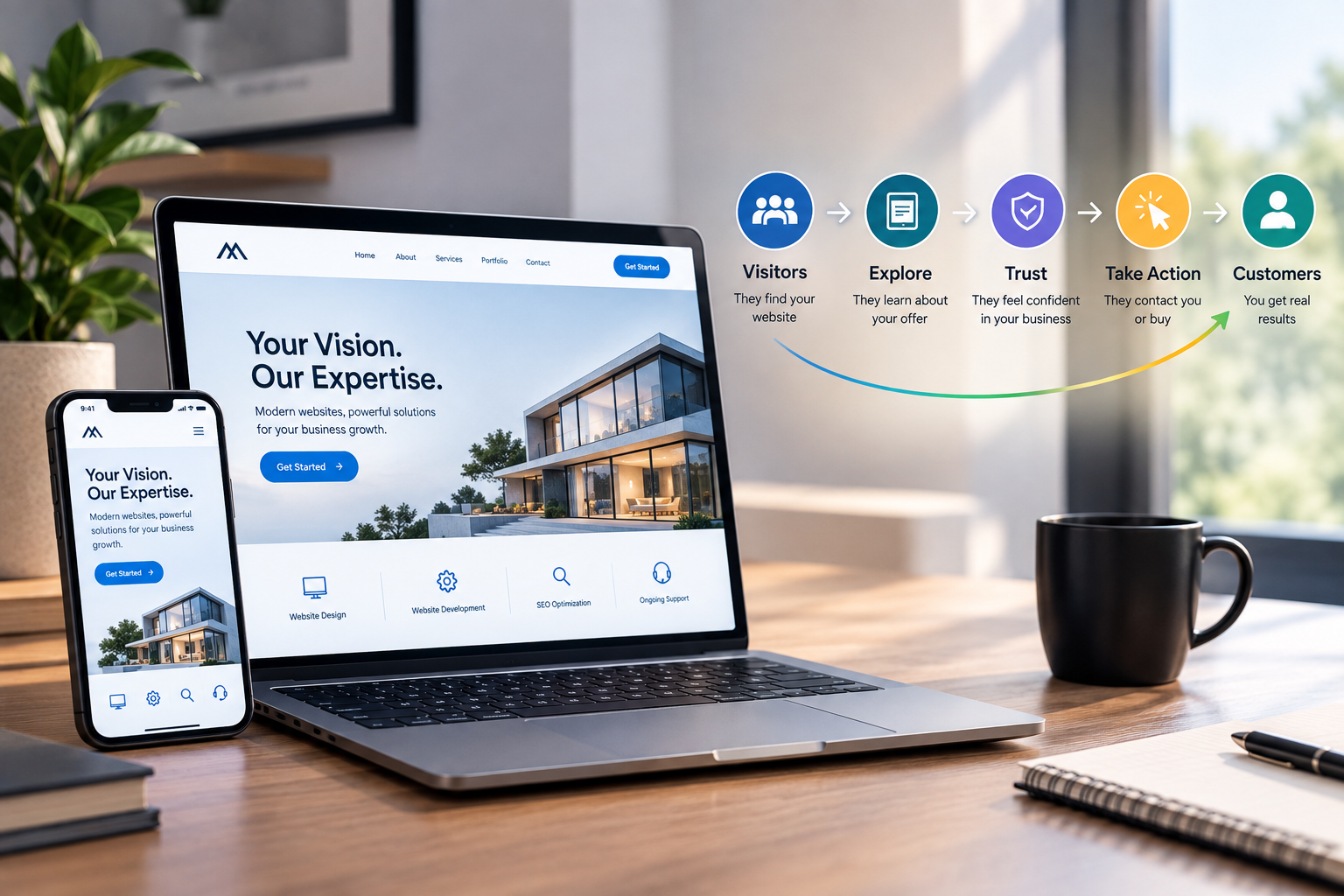
Getting people to visit your website is only the first step. The real challenge is turning those visitors into customers.
You may have good traffic, a professional-looking website, and useful services or products, yet still receive very few inquiries or sales. When that happens, the problem isn’t always the amount of traffic you’re getting.
Sometimes, the problem is what happens after visitors arrive.
If people can’t quickly understand what you offer, don’t trust the website, struggle to navigate it, or don’t know what to do next, they may simply leave without taking any action.
In this article, we’ll look at some of the most common reasons why a website gets visitors but fails to generate customers, and what you can do to create a more effective online experience.
1. Your Website Doesn't Clearly Explain What You Offer
Visitors should understand what your business does within a few seconds of arriving on your website.
If your homepage uses vague headlines, complicated wording, or too much information without a clear structure, visitors may have difficulty answering basic questions:
- What does this business offer?
- Who is it for?
- Why should I choose it?
- What should I do next?
Your website should communicate your main value clearly and immediately.
A strong headline, short supporting text, and a clear call to action can help visitors understand your offer without having to search through the entire page.
2. Your Website Looks Professional but Isn't Designed for Conversions
A beautiful website doesn’t automatically generate customers.
Design should support the visitor’s journey rather than simply make the page look attractive.
For example, your website might contain impressive animations, large images, and modern effects, but if visitors can’t easily find your services or contact information, the design isn’t helping the business.
Conversion-focused design considers:
- Where important information appears
- How visitors move between sections
- Where calls to action are placed
- How much information is shown at once
- How easily visitors can contact you
- How the website works on mobile devices
The goal is to make the next step obvious and easy.
3. Your Calls to Action Are Weak or Missing
Visitors need a reason and an opportunity to take action.
A website without clear calls to action can leave visitors wondering what they should do next.
Depending on your business, the desired action might be:
- Get a quote
- Contact us
- Book a consultation
- Buy now
- Request more information
- Schedule an appointment
- View our services
Instead of relying on generic buttons everywhere, use calls to action that clearly communicate the next step.
For example:
Get Your Free Quote
is more specific than:
Click Here
Your CTA should match the visitor’s intent and the purpose of the page.
Check our Website Creation, Design & Setup services !
4. Your Website Doesn't Build Enough Trust
Before contacting or buying from a business, visitors often want reassurance that they are making the right choice.
If your website provides little evidence of credibility, visitors may hesitate even if they are interested in your offer.
Trust can be strengthened through:
- Customer reviews
- Testimonials
- Case studies
- Portfolio examples
- Clear business information
- Professional contact details
- Guarantees where appropriate
- Secure and reliable checkout processes
- Clear policies
Trust doesn’t come from adding one “Trust Us” section.
It comes from creating a website that consistently feels professional, transparent, and credible.
5. Your Website Is Difficult to Use on Mobile
A website can look excellent on a desktop and still provide a poor experience on smartphones.
If buttons are too small, text is difficult to read, forms are uncomfortable to complete, or important sections don’t display correctly, mobile visitors may leave.
A responsive website should adapt its:
- Layout
- Typography
- Images
- Buttons
- Navigation
- Forms
- Spacing
- Product displays
to different screen sizes.
Mobile responsiveness isn’t simply about making everything smaller.
It’s about creating an experience that remains easy and comfortable to use.
6. Your Website Is Too Slow
Even interested visitors can leave if they have to wait too long.
Website speed affects the overall experience from the moment someone clicks on your website.
Large images, unnecessary scripts, excessive plugins, poor hosting, and inefficient configurations can all contribute to slower loading times.
Performance optimization should focus on the real causes of the problem rather than simply trying to achieve a perfect automated score.
A faster website can make it easier for visitors to:
- Explore your services
- Browse products
- Read your content
- Navigate between pages
- Complete forms
- Finish purchases
Speed is therefore part of both user experience and conversion optimization.
7. Your Content Talks About Your Business Instead of the Customer
One of the easiest mistakes to make is writing website content entirely from the business’s perspective.
Visitors aren’t only interested in what you do.
They want to know how you can help them.
Instead of focusing only on statements such as:
“We provide professional web design services.”
You can communicate the benefit more clearly:
“Build a professional website that helps your business attract visitors and generate more inquiries.”
The difference is small, but the second message connects the service to a customer outcome.
Good website content should answer the visitor’s questions and show them why your solution matters.
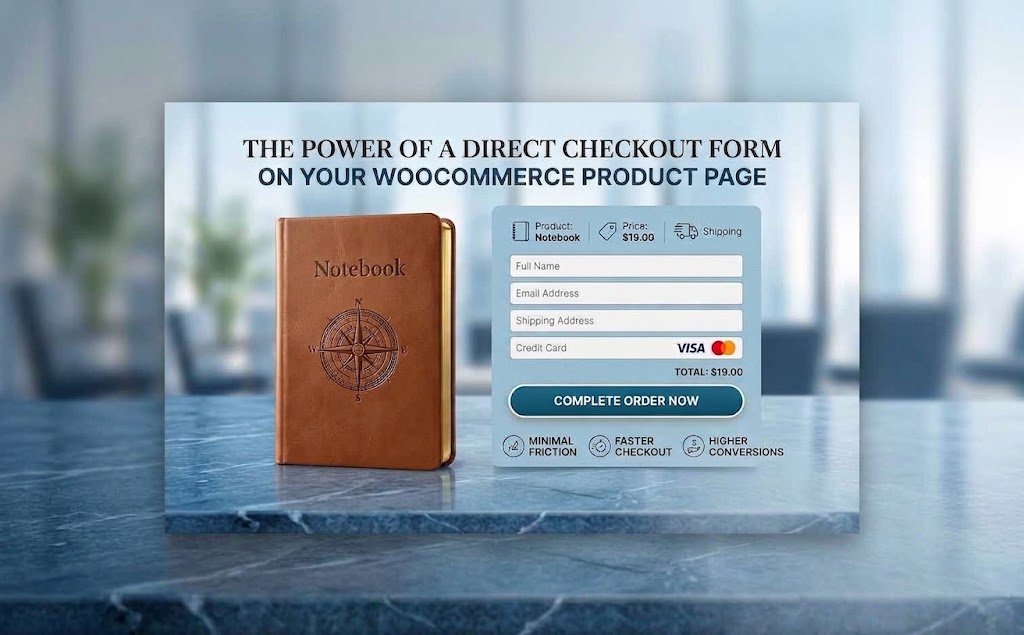
8. Your Contact or Purchase Process Is Too Complicated
Even when a visitor decides to take action, unnecessary friction can stop them.
For a service website, this might mean a long or confusing contact form.
For an ecommerce website, it could mean a complicated checkout process with too many fields or unnecessary steps.
The principle is simple:
The more difficult the action feels, the easier it becomes for the visitor to abandon it.
Try to remove unnecessary steps while still collecting the information your business actually needs.
A simple buying or contact process can make the difference between interest and action.
9. Your Website Doesn't Match the Traffic You're Getting
Not all website traffic has the same intention.
Someone searching for “how to create a website” may not be ready to hire a web developer.
Someone searching for “professional WordPress website for small business” may have a much stronger commercial intention.
If your marketing attracts one type of visitor but your website is designed for another, conversions can remain low.
Your:
Traffic → Landing Page → Message → Offer → CTA
should all be connected.
The visitor should feel that they arrived at the right place.
10. You Haven't Tested What Works
Sometimes the problem isn’t obvious.
You may think your homepage, CTA, contact form, or product page is working well, but your visitors may behave differently than expected.
Useful data can help you understand:
- Which pages receive the most traffic
- Where visitors leave
- Which pages generate inquiries
- How users navigate your website
- Which devices visitors use
- Which traffic sources generate better results
Tools such as Google Analytics, Search Console, and other analytics solutions can provide valuable information.
The goal isn’t to collect data for the sake of collecting data.
It’s to use that information to make better decisions about your website.
Traffic Is Only Part of the Equation
A website’s success isn’t determined by how many people visit it.
Consider these two websites:
Website A:
10,000 visitors → 20 inquiries
Website B:
2,000 visitors → 50 inquiries
Website B receives less traffic but generates more inquiries.
This is why increasing traffic isn’t always the first thing you should fix.
Sometimes, improving the website you already have can create better results from the visitors you’re already receiving.
Build a Website Around the Customer Journey
A successful website should guide visitors naturally from their first interaction to the desired action.
A simplified customer journey might look like this:
Discover → Understand → Trust → Explore → Decide → Act
Every part of the website should support this journey.
Your homepage introduces the business.
Your service or product pages explain the offer.
Your content answers questions.
Your testimonials build confidence.
Your calls to action guide visitors.
Your contact or checkout process makes the final step easy.
When these elements work together, the website becomes more than a digital brochure.
It becomes a business tool.
Conclusion
If your website gets visitors but doesn’t generate enough customers, the solution isn’t always to spend more money on advertising or SEO.
The problem may be inside the website itself.
Unclear messaging, weak calls to action, poor mobile experience, slow loading times, complicated forms, weak trust signals, and confusing navigation can all prevent interested visitors from becoming customers.
The good news is that these problems can often be identified and improved.
The goal isn’t simply to get more people to your website.
It’s to make the people who already arrive understand your offer, trust your business, and know exactly what to do next.
How Horizon WP Services Can Help Turn Visitors Into Customers
At Horizon WP Services, we build and improve WordPress websites with more than appearance in mind.
A professional website should communicate your offer clearly, provide a smooth user experience, perform well across devices, and guide visitors toward meaningful actions.
We can help you:
- Design a professional WordPress website around your business goals.
- Improve existing websites that aren’t generating enough inquiries.
- Create conversion-focused landing pages.
- Improve website structure and user experience.
- Optimize WooCommerce product and checkout experiences.
- Improve mobile responsiveness and website performance.
- Strengthen your website’s SEO foundations.
- Add clear calls to action and better conversion paths.
Whether you’re starting a new website or trying to improve an existing one, the goal is the same:
Turn your website from a simple online presence into a tool that supports your business.
👉Getting visitors but not enough customers?
Let’s identify what’s holding your website back and build a better experience for your visitors.
Looking for professional WordPress security services? Horizon WP Services provides comprehensive security solutions that protect your business from cyber threats. Contact us today for a free security consultation and vulnerability assessment.
Latest Blogs
Why Your Website Gets Visitors but No Customers
How Much Does a Professional WordPress Website Cost?